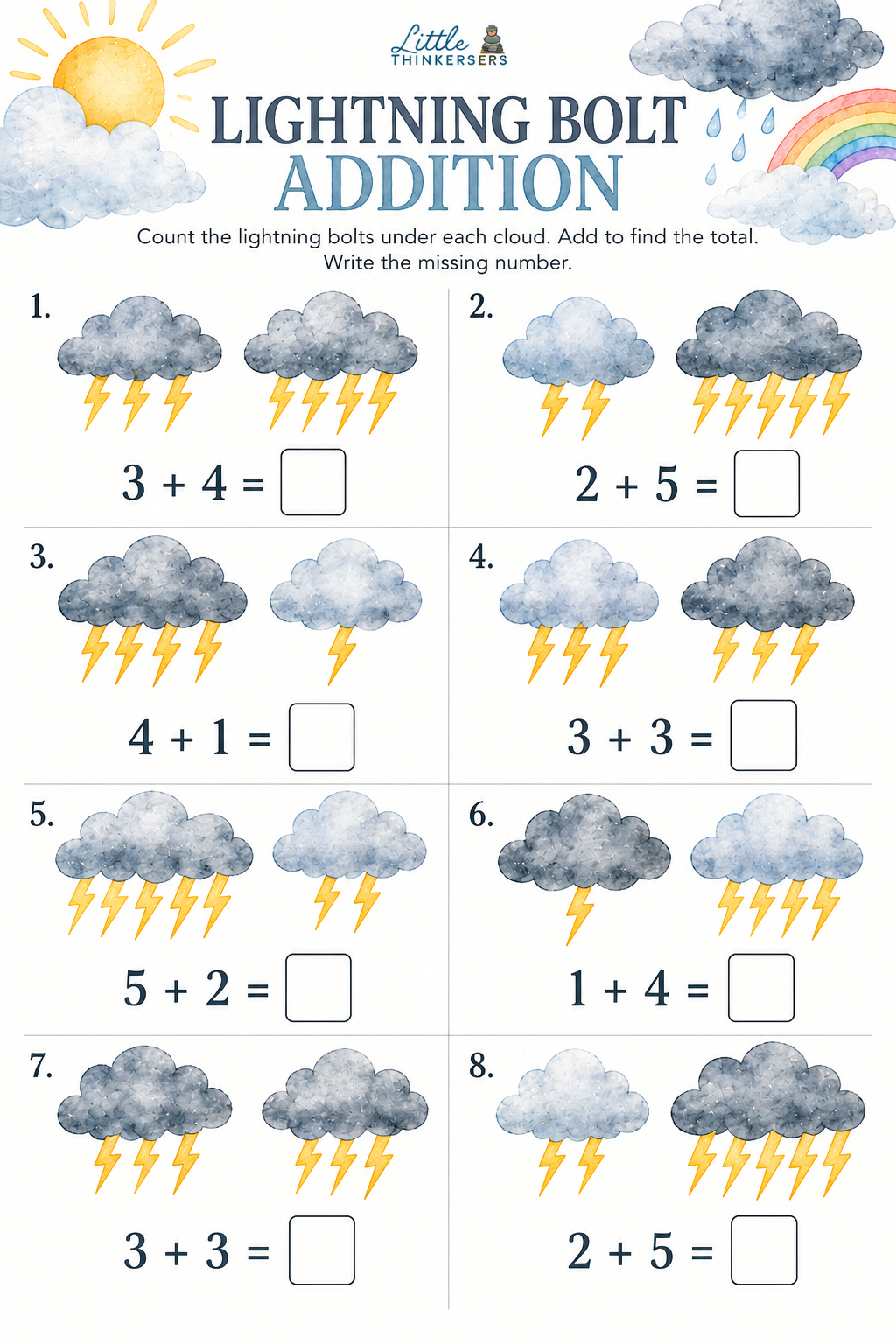
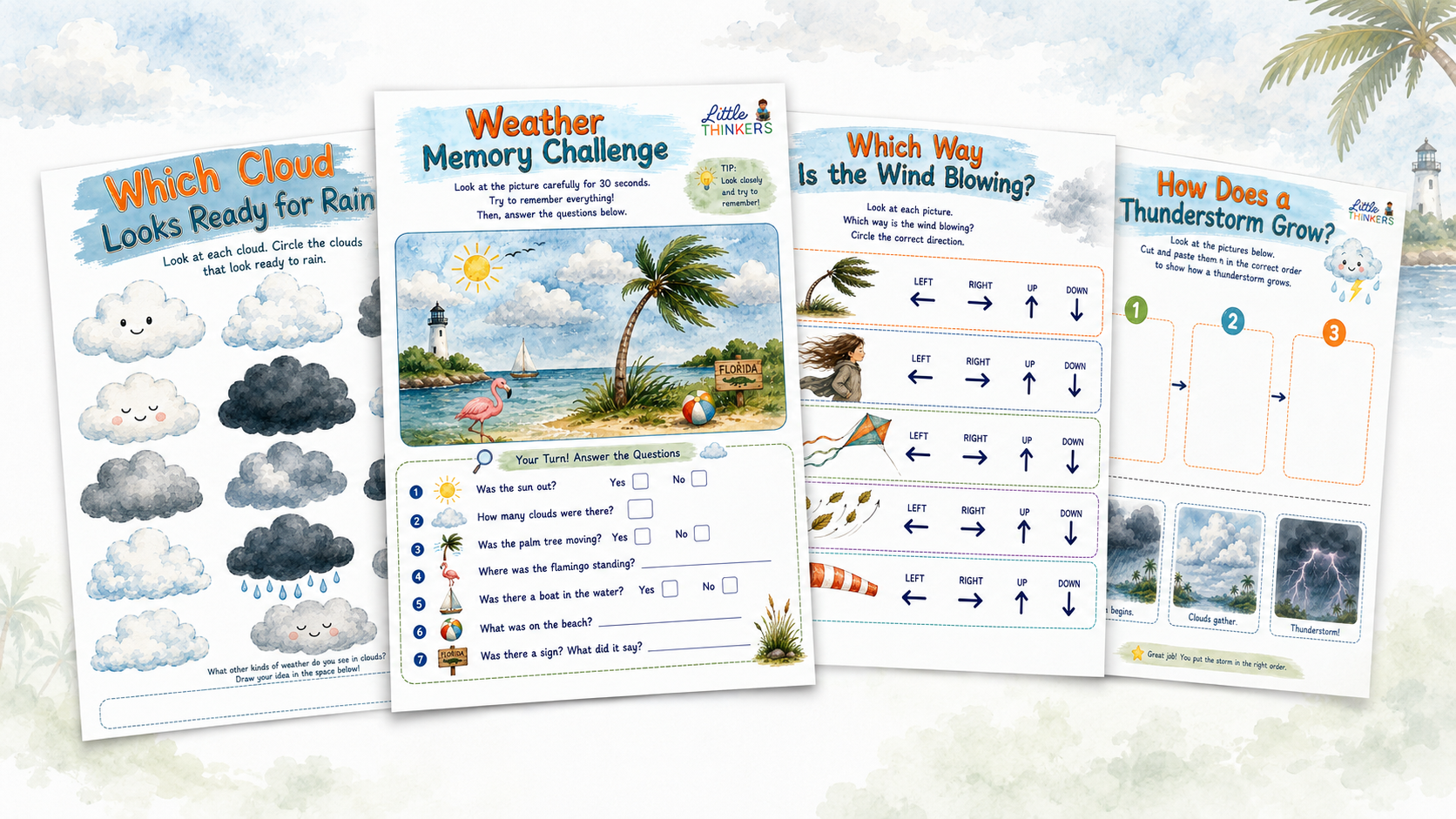
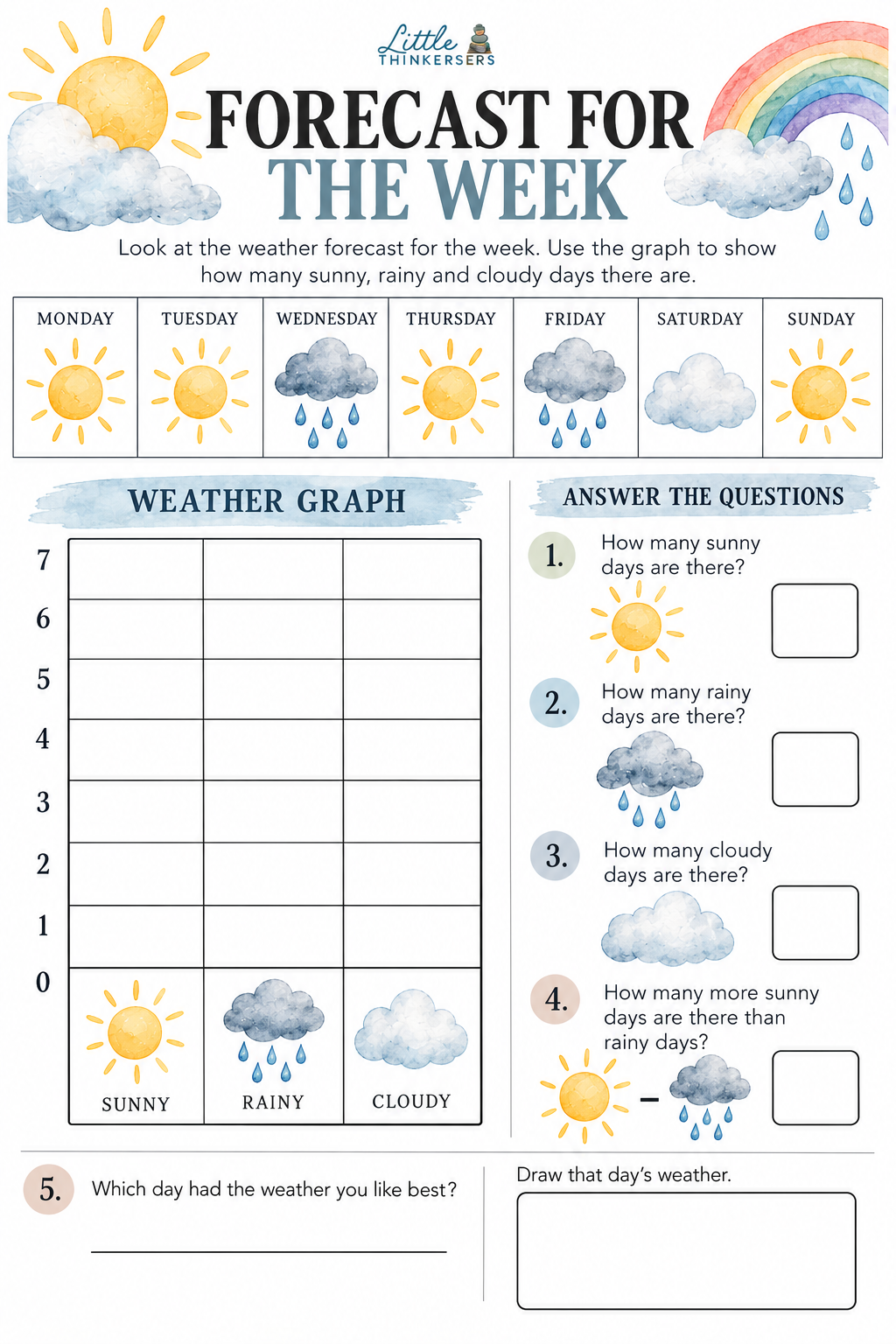
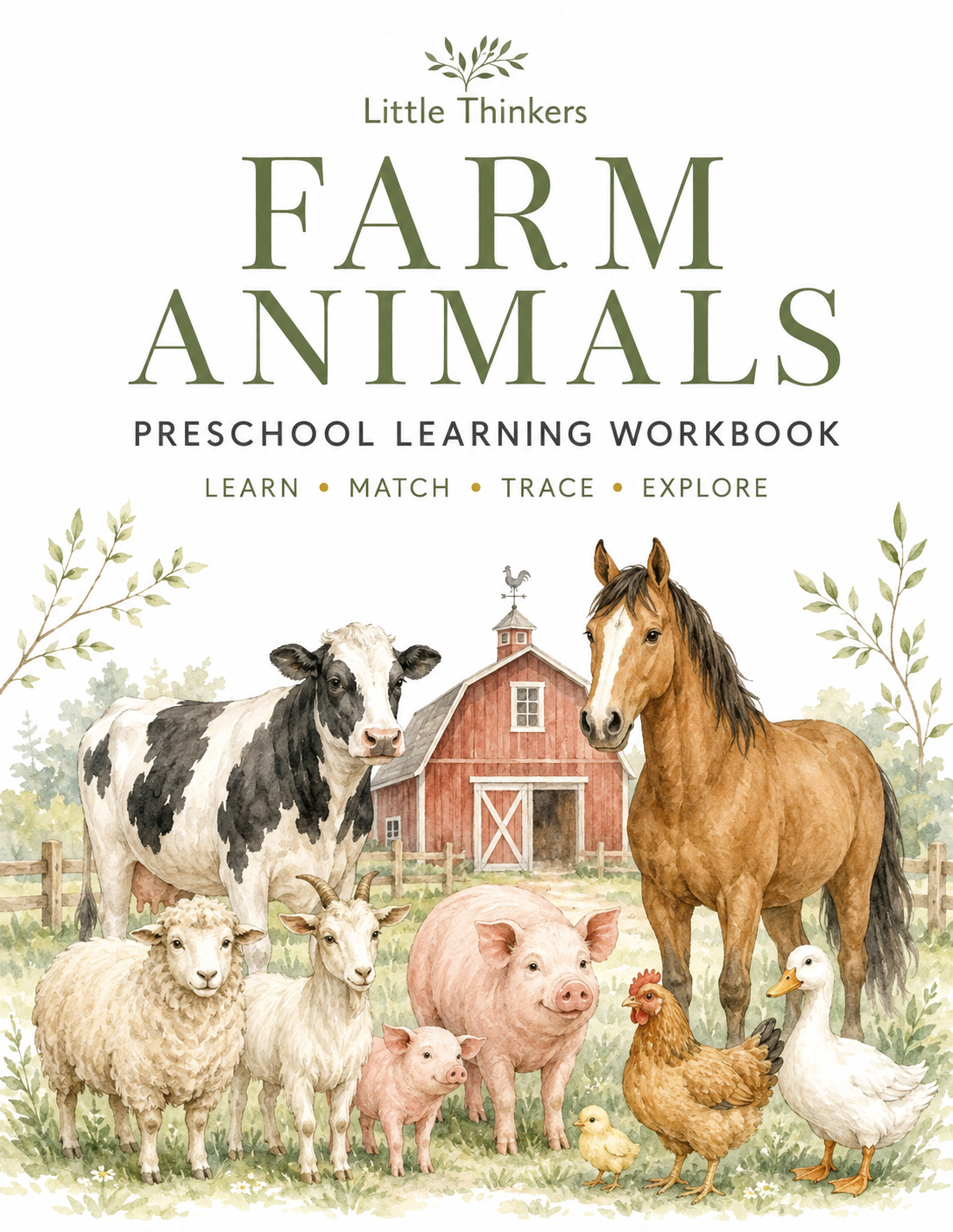
Look closer. Compare the clues. Think before you answer.
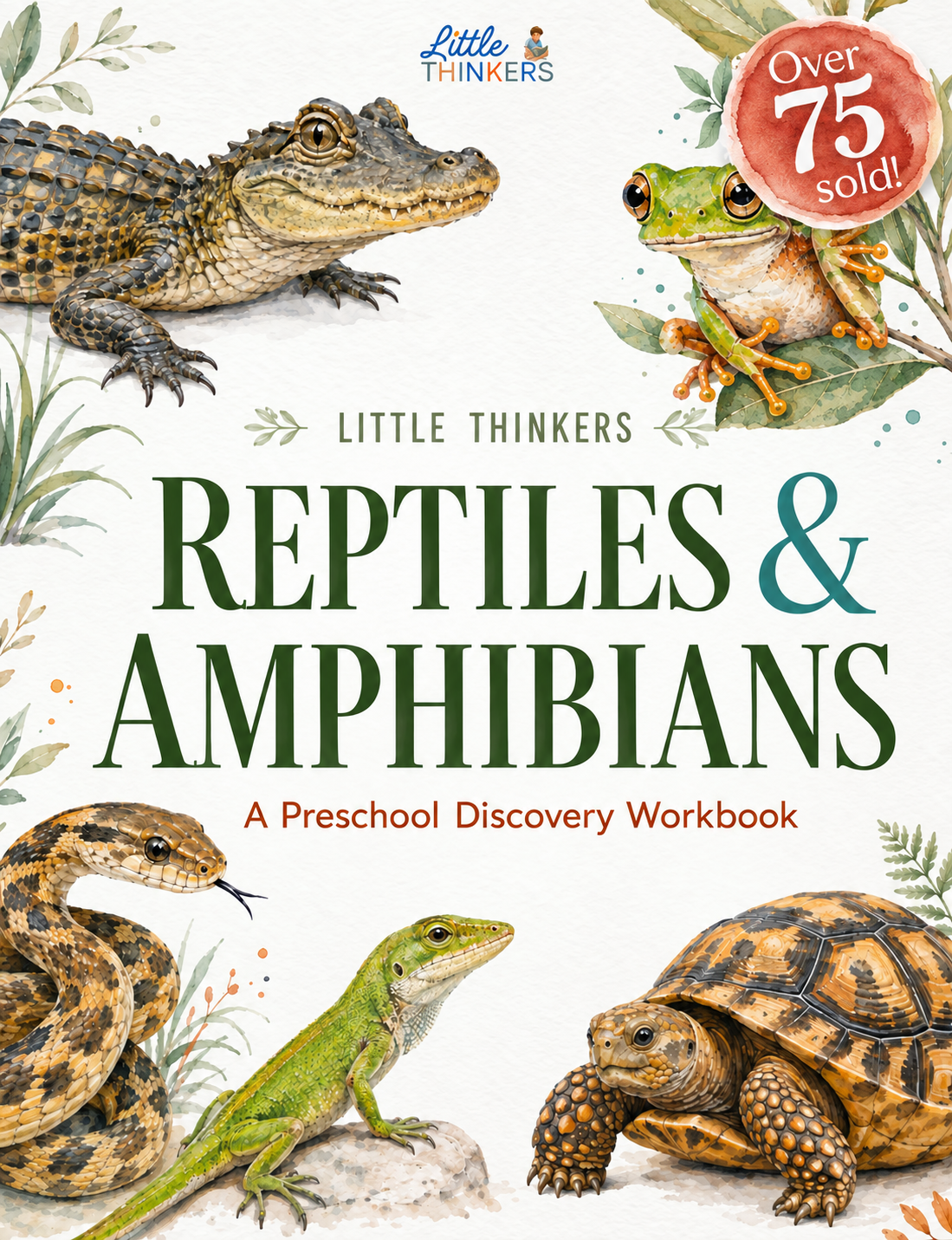
This is Part 2 of our Reptiles & Amphibians study—and this time, we're going deeper.
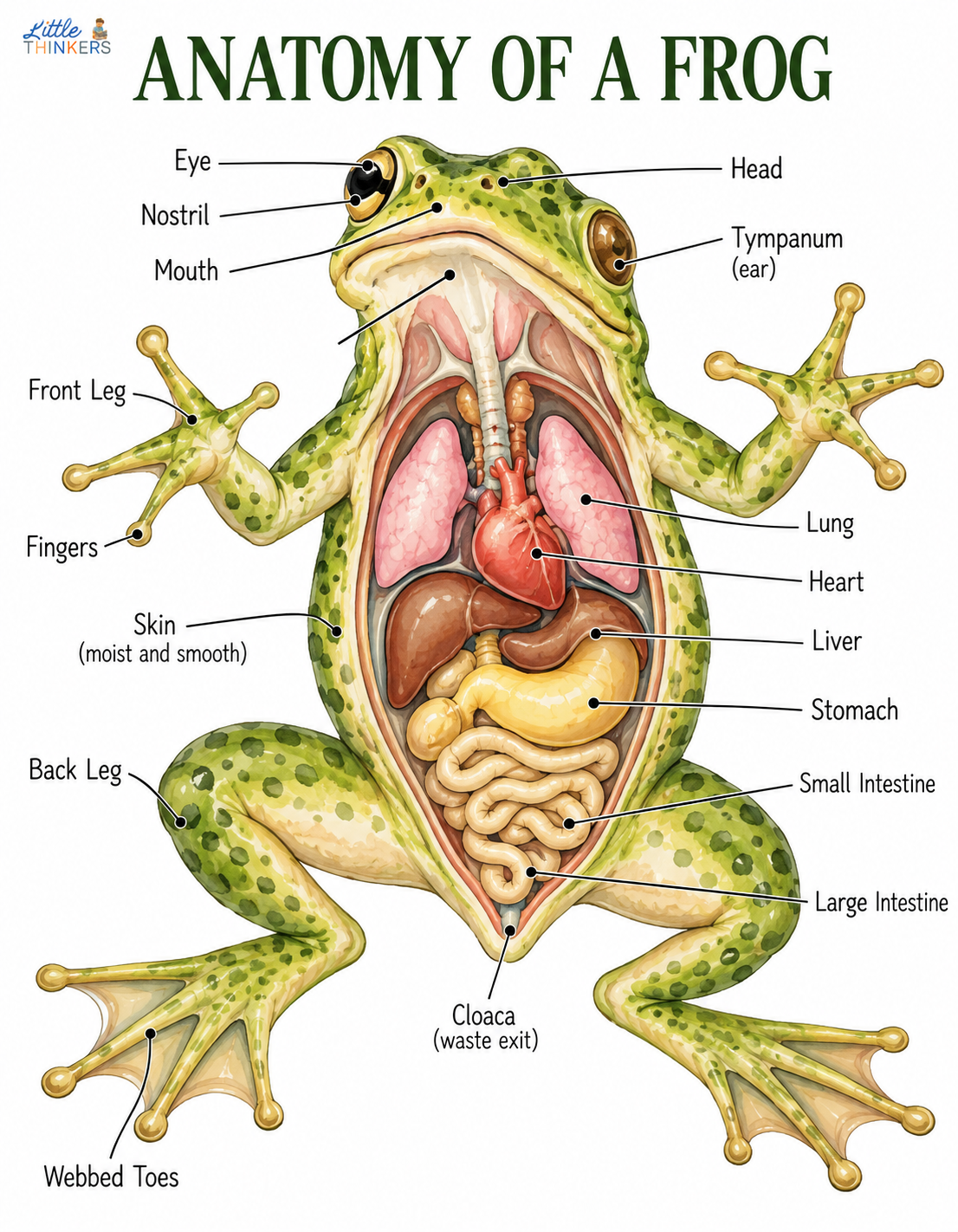
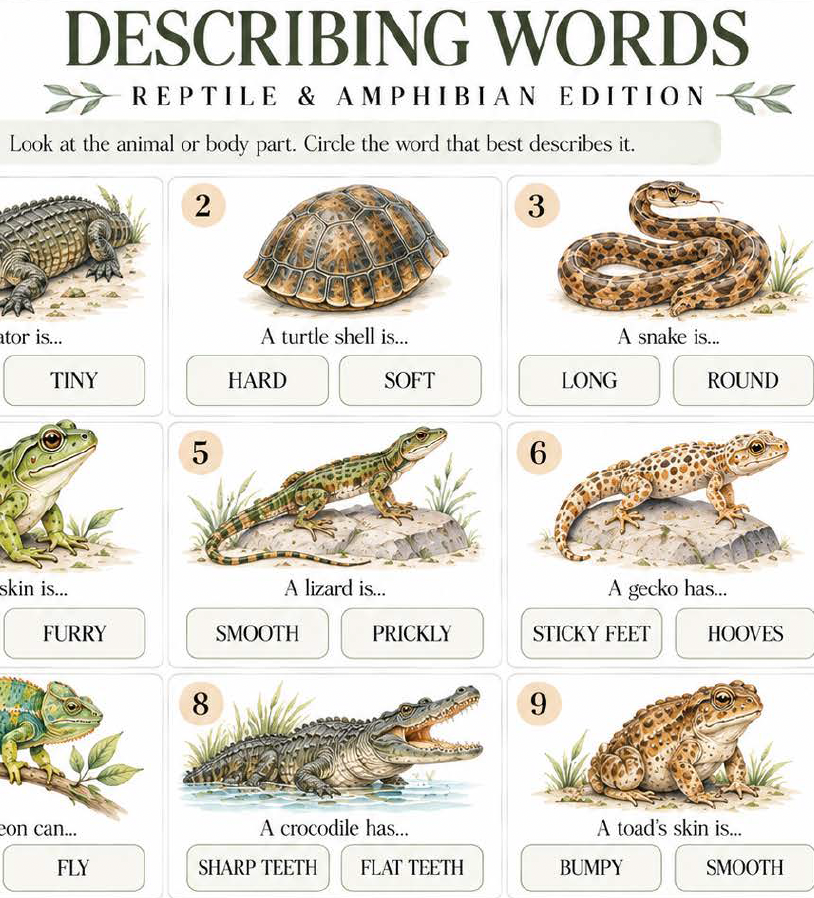
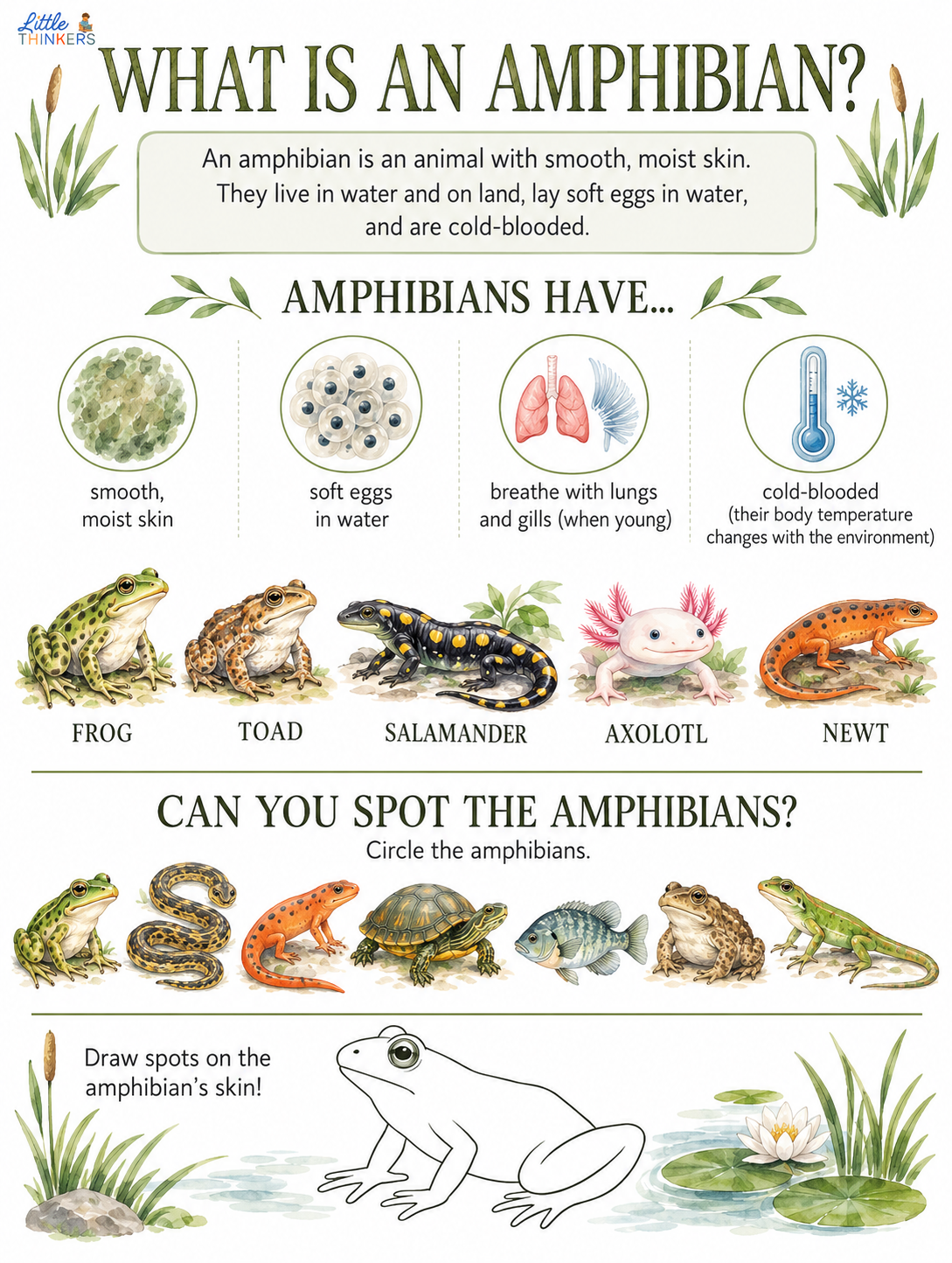
While our original workbook introduces children to reptiles and amphibians and teaches the basic characteristics of each group, Part 2 moves beyond simply learning the facts. Children are challenged to compare, classify, investigate and use evidence to figure out why an animal belongs to one group or the other.
Through visual puzzles and science-based reasoning activities, little learners explore differences in skin, scales, eggs, habitats, body coverings and life cycles while discovering an important scientific idea: two animals can share a habitat or look similar and still belong to completely different groups.
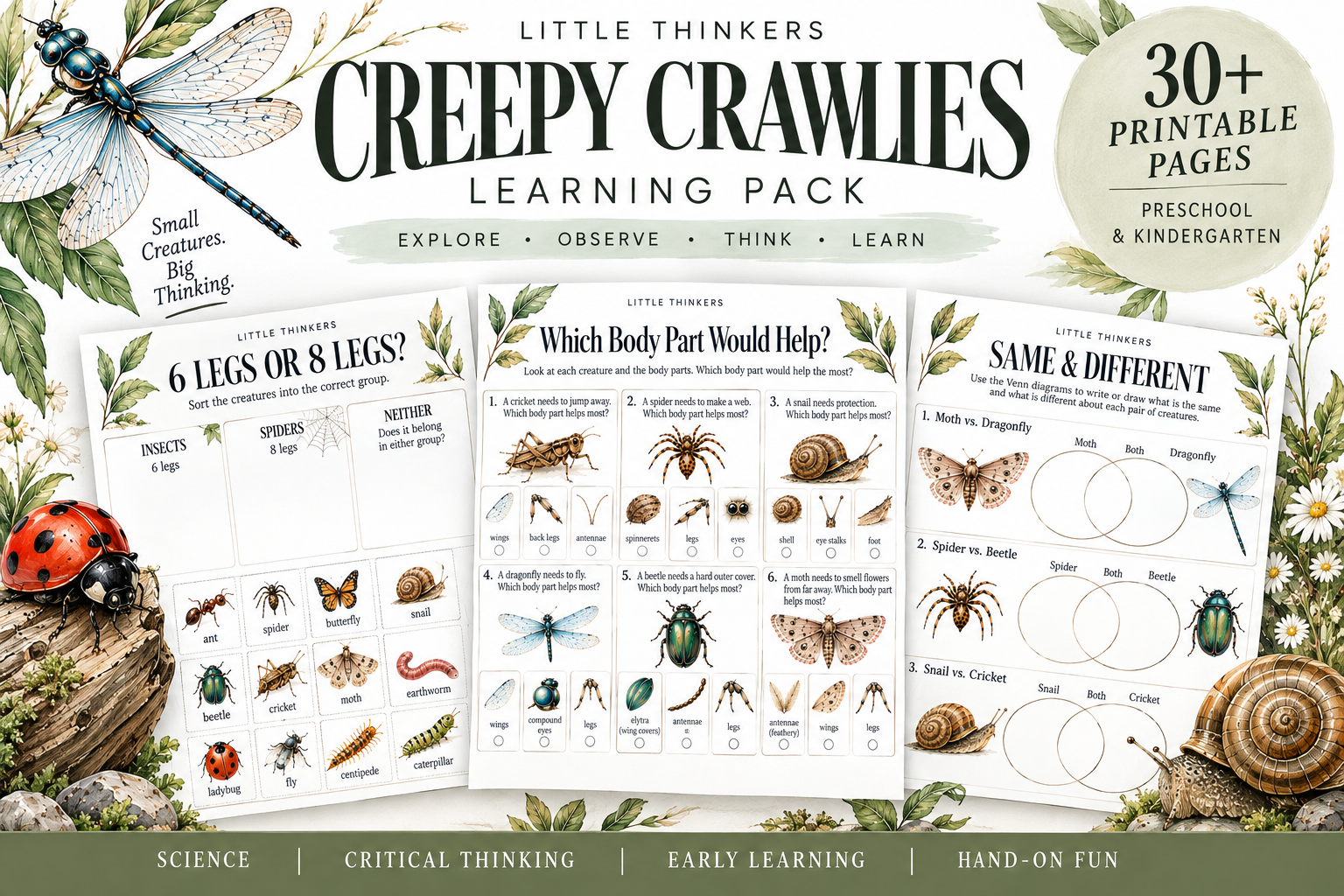
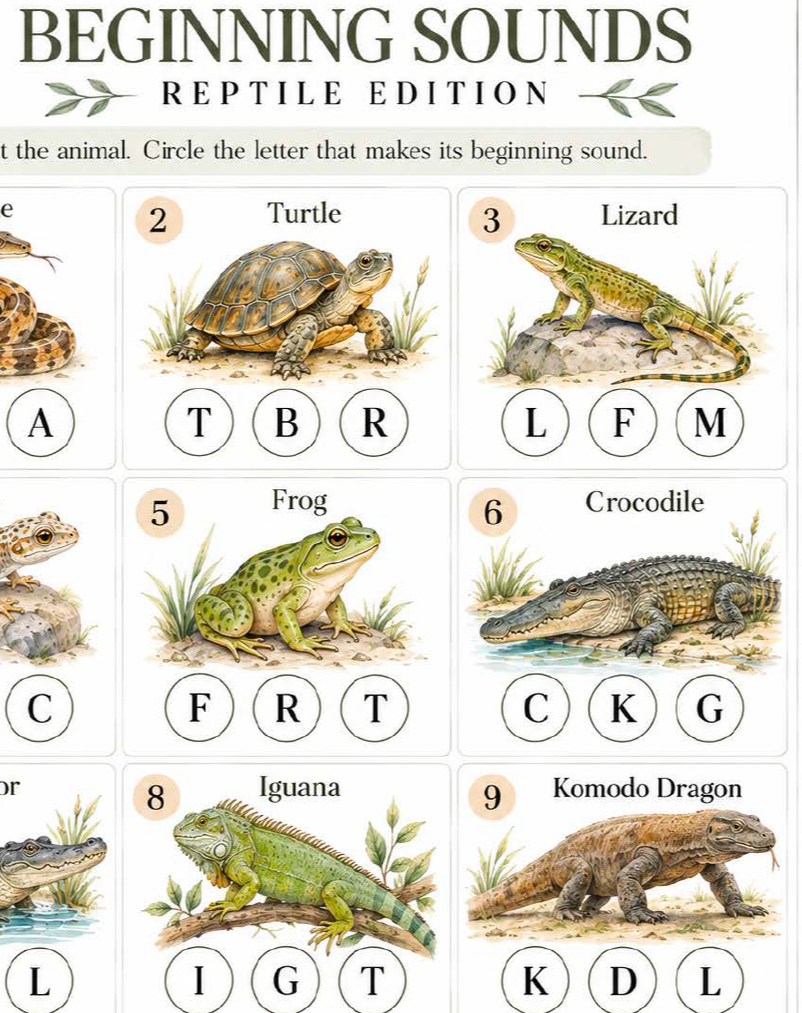
Activities include Reptile or Amphibian? • Skin Detective • Which Clue Matters? • What Can't Be True? • Read the Clues • AND vs. OR • Same Habitat, Different Animal • Life Cycle Compare • Which One Doesn't Belong? and more.
Rather than relying only on memorization, children practice observation, comparison, deductive reasoning, classification, visual discrimination and cognitive flexibility.
22 Pages • Designed for Preschool, Pre-K & Kindergarten • Ages 4–6
Part 2 of the Little Thinkers Reptiles & Amphibians Study.
For children new to the topic, we recommend beginning with Part 1 to learn the foundational characteristics of reptiles and amphibians before moving into this deeper critical-thinking study.
Look closer. Compare the clues. Think before you answer.
This is Part 2 of our Reptiles & Amphibians study—and this time, we're going deeper.
While our original workbook introduces children to reptiles and amphibians and teaches the basic characteristics of each group, Part 2 moves beyond simply learning the facts. Children are challenged to compare, classify, investigate and use evidence to figure out why an animal belongs to one group or the other.
Through visual puzzles and science-based reasoning activities, little learners explore differences in skin, scales, eggs, habitats, body coverings and life cycles while discovering an important scientific idea: two animals can share a habitat or look similar and still belong to completely different groups.
Activities include Reptile or Amphibian? • Skin Detective • Which Clue Matters? • What Can't Be True? • Read the Clues • AND vs. OR • Same Habitat, Different Animal • Life Cycle Compare • Which One Doesn't Belong? and more.
Rather than relying only on memorization, children practice observation, comparison, deductive reasoning, classification, visual discrimination and cognitive flexibility.
22 Pages • Designed for Preschool, Pre-K & Kindergarten • Ages 4–6
Part 2 of the Little Thinkers Reptiles & Amphibians Study.
For children new to the topic, we recommend beginning with Part 1 to learn the foundational characteristics of reptiles and amphibians before moving into this deeper critical-thinking study.

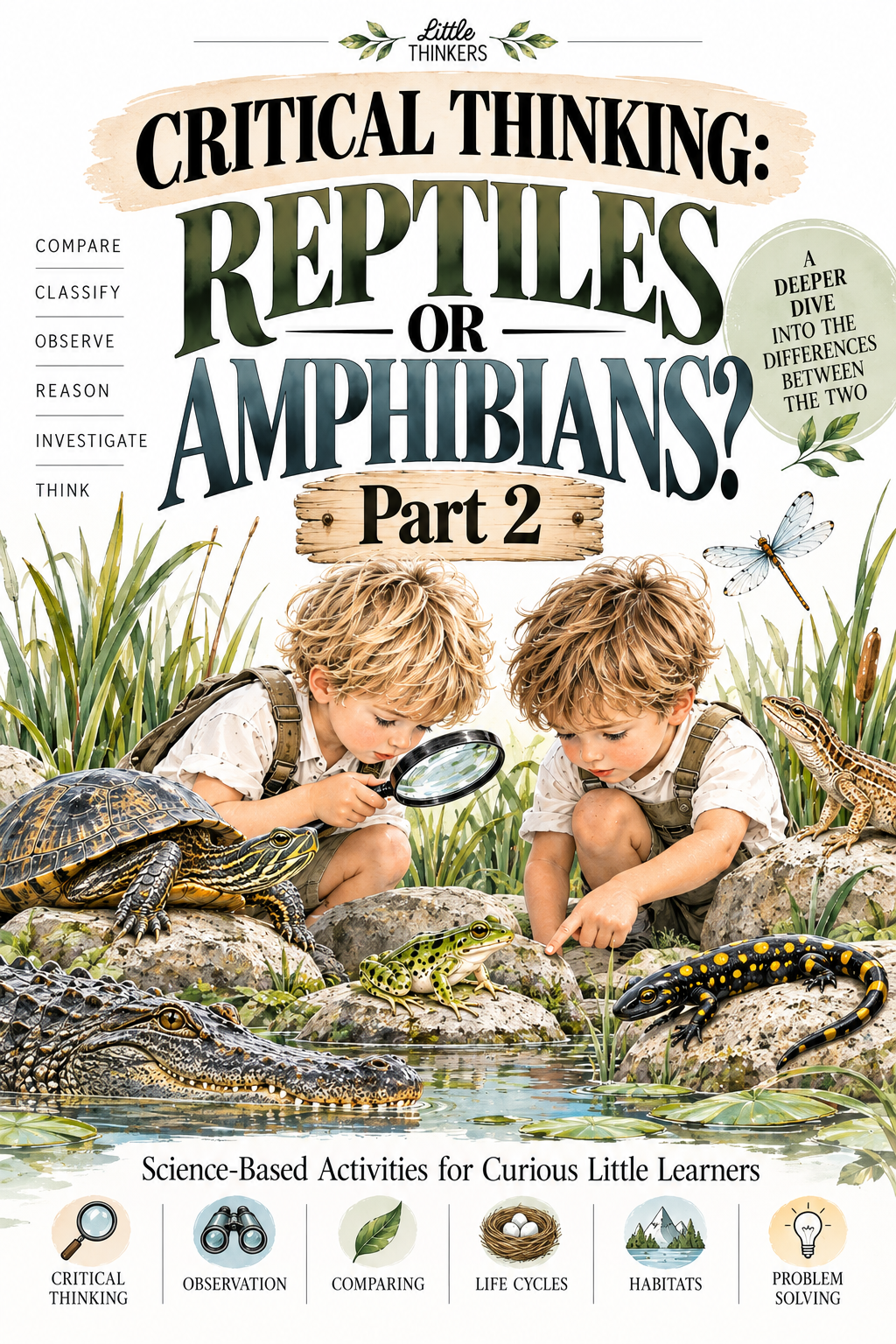 Image 1 of 4
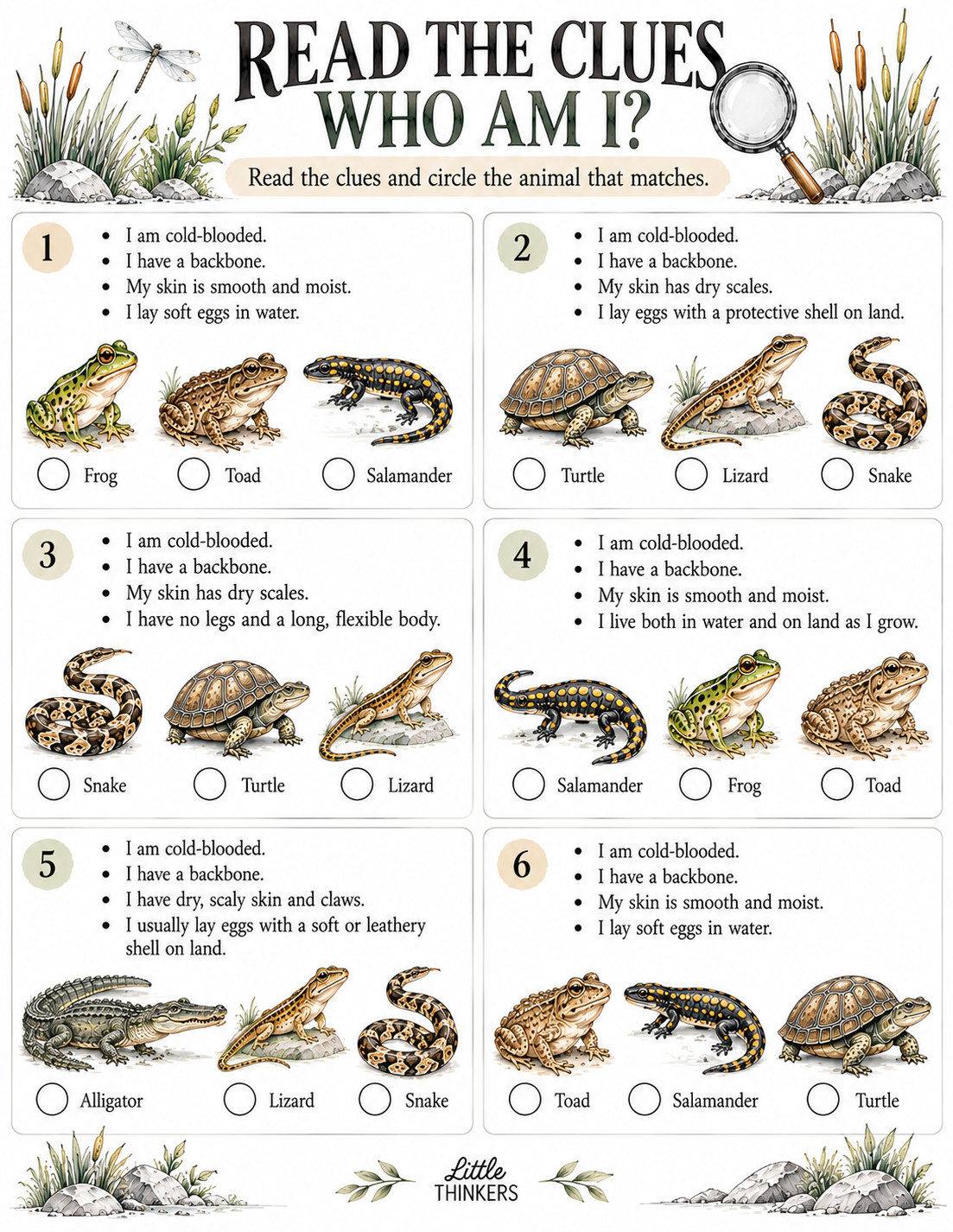 Image 2 of 4
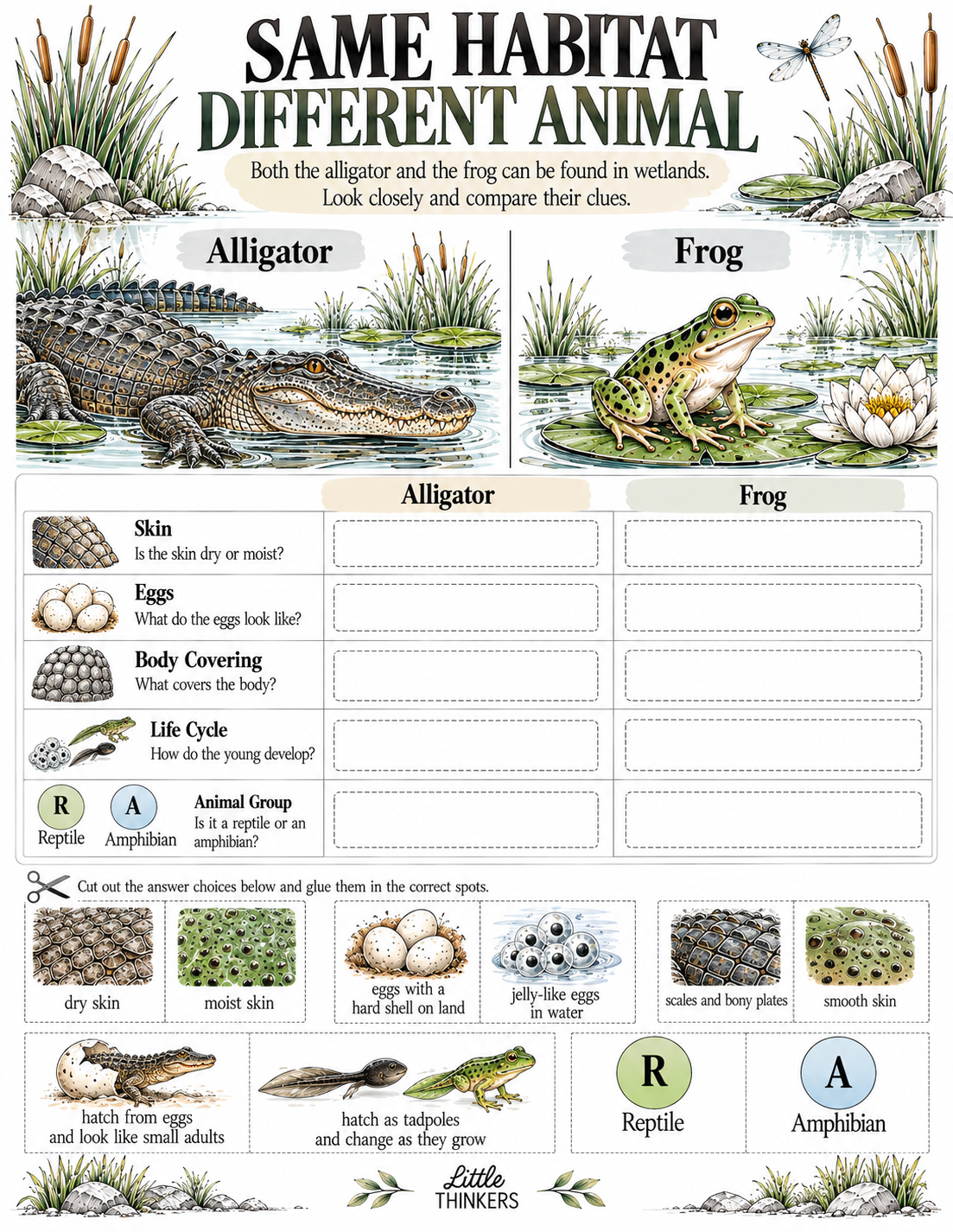 Image 3 of 4
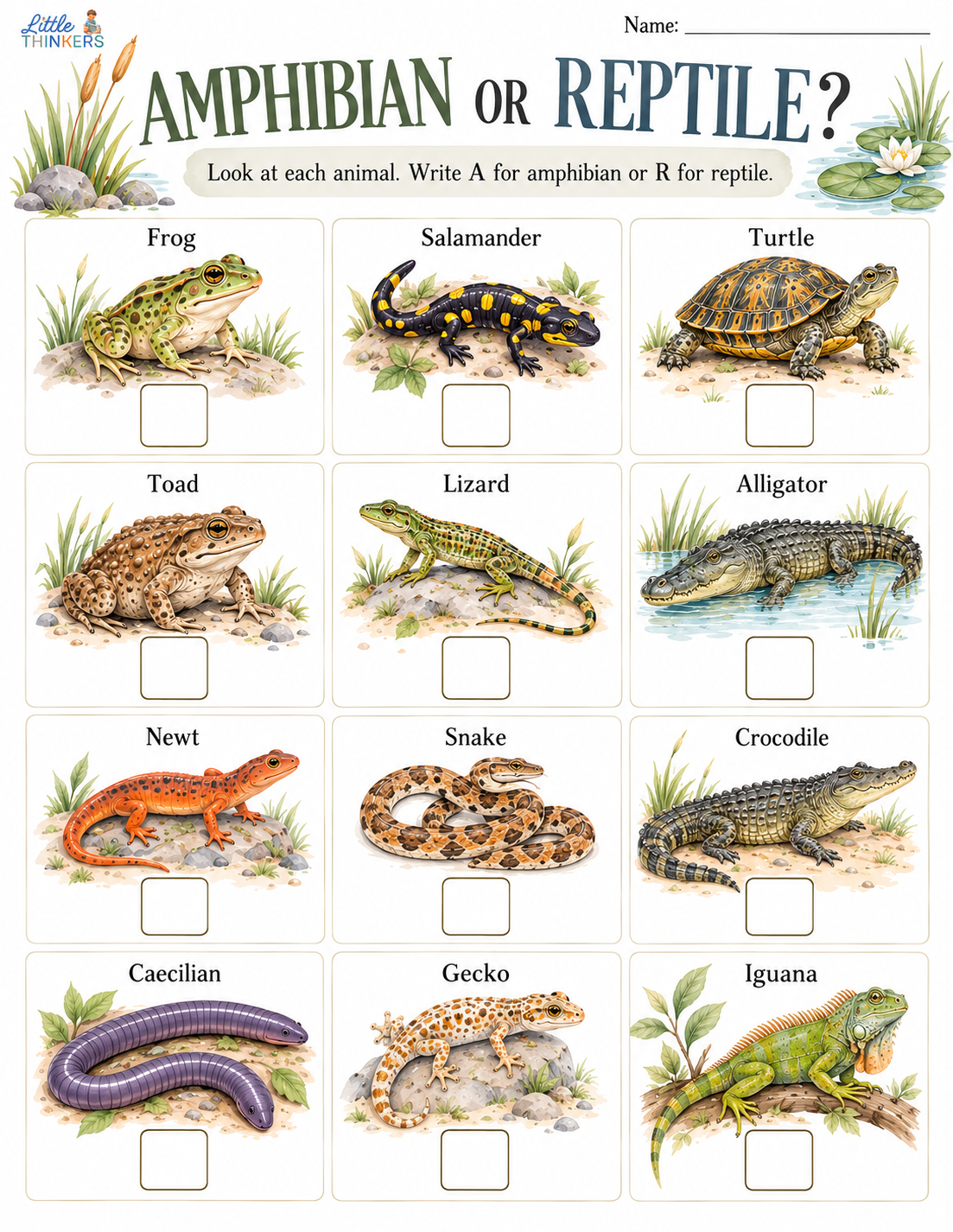 Image 4 of 4