 Image 1 of 1
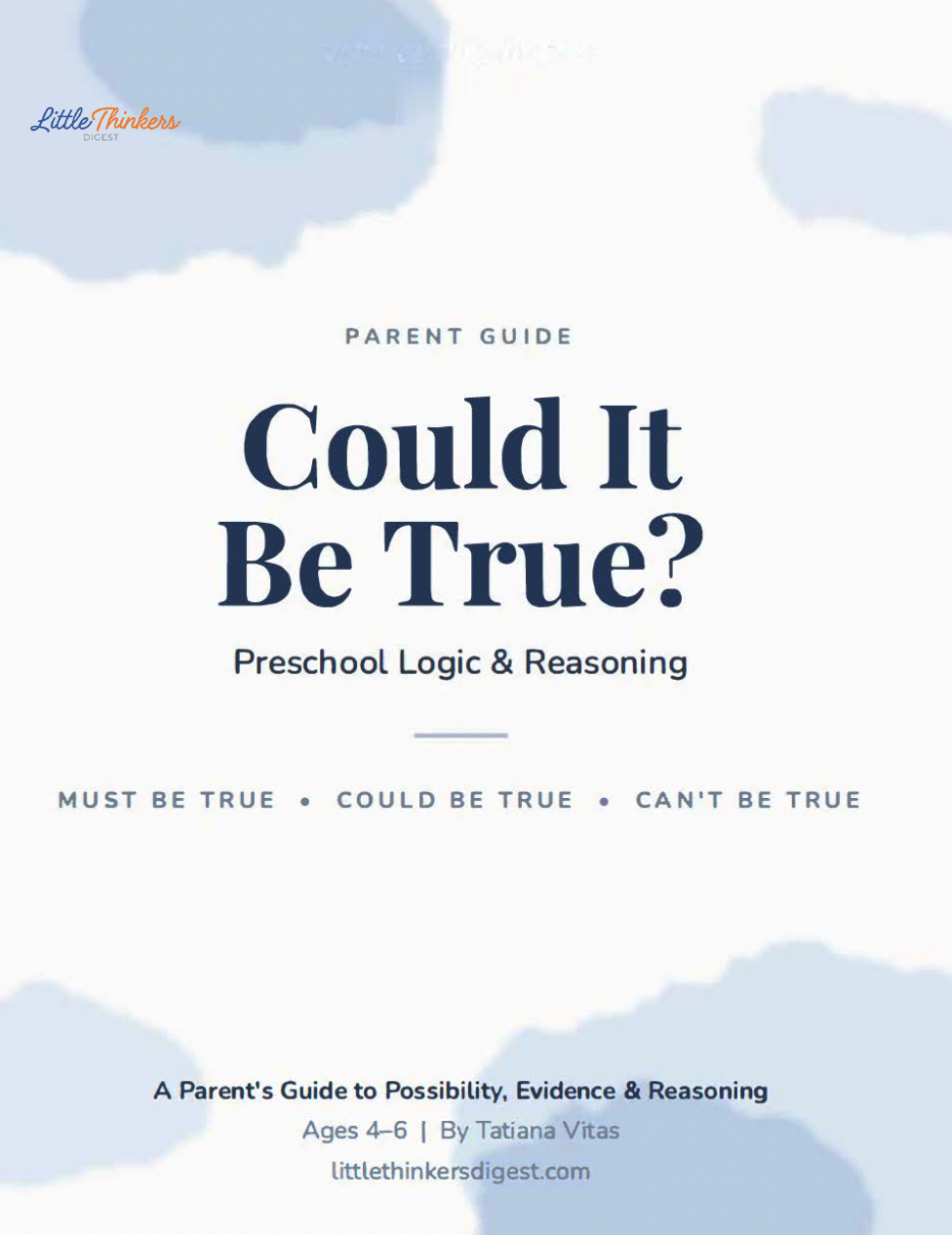
A Parent's Guide • Could It Be True? • Possibility, Evidence & Reasoning
$2.00
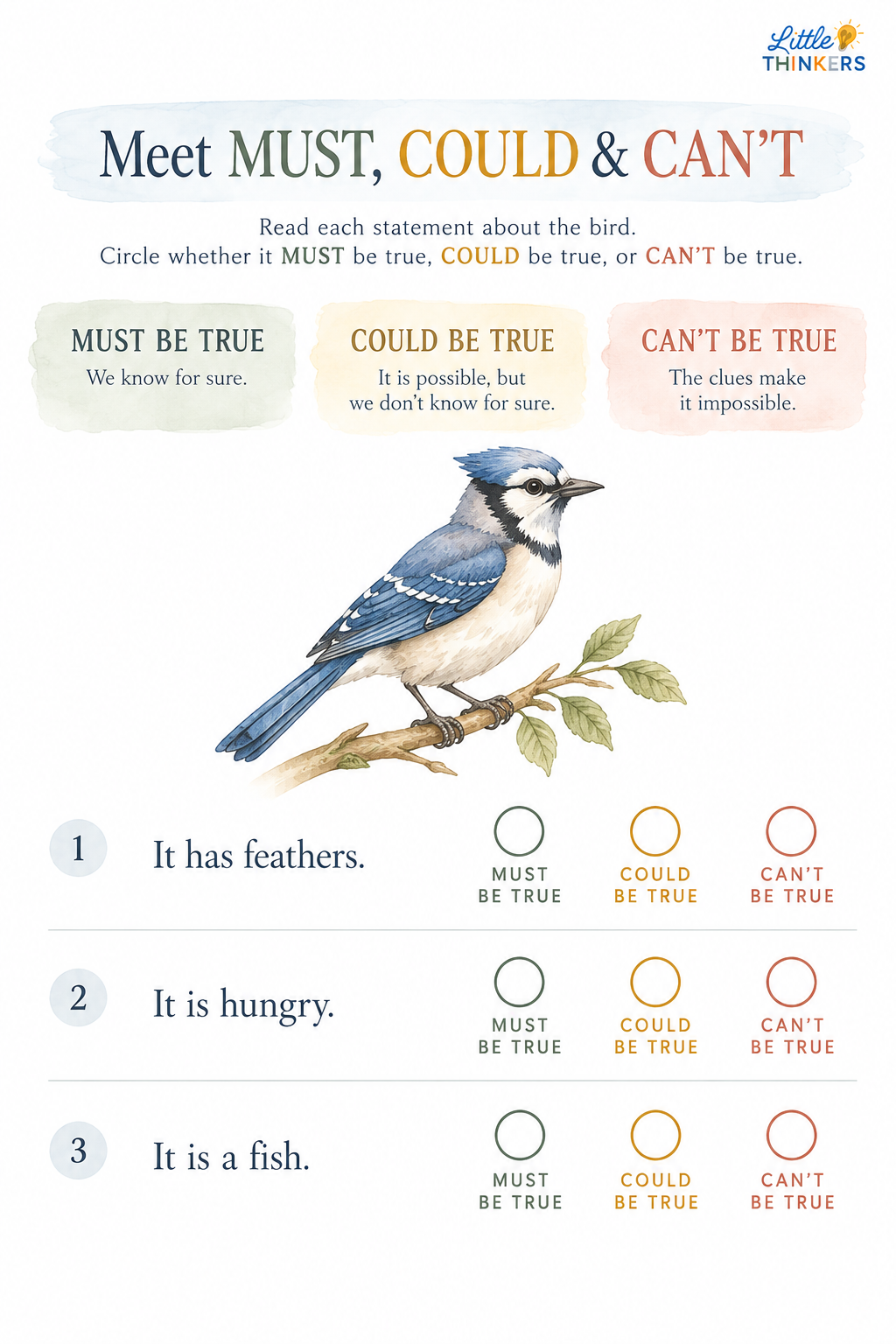
How do you teach a child the difference between what they know, what might be true, and what simply can’t be true?
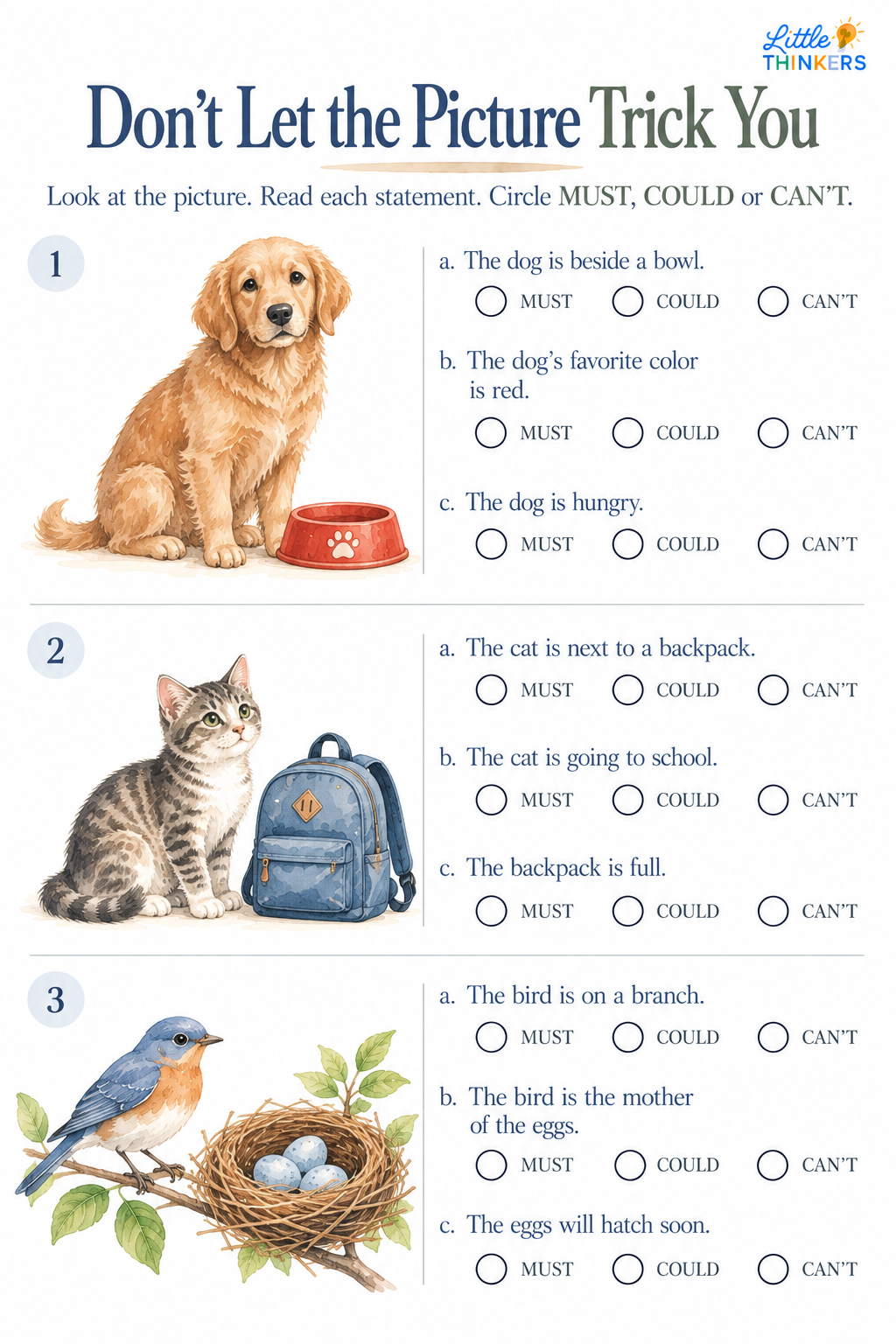
The Could It Be True? Parent Guide was created to help parents introduce young children to one of the foundations of critical thinking: learning to use evidence before jumping to a conclusion.
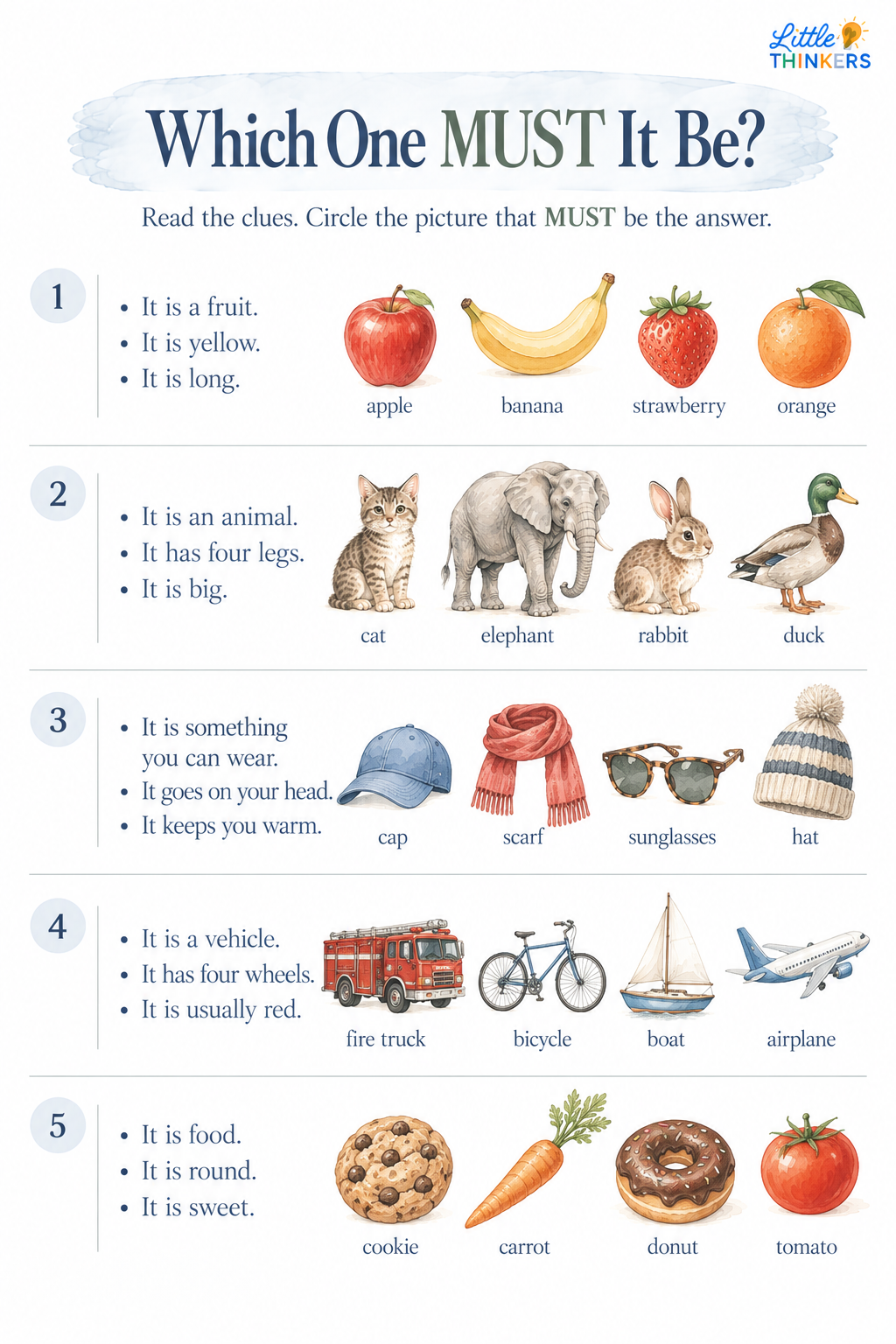
Using the simple language of MUST BE TRUE • COULD BE TRUE • CAN’T BE TRUE, this guide shows you how to help your little thinker slow down, notice clues, consider more than one possibility and explain why an answer makes sense.
Inside, parents will learn how to help children:
distinguish facts from assumptions
understand possibility vs. certainty
recognize when there isn’t enough information
use clues and evidence to support an answer
eliminate possibilities that can’t be true
understand that more than one answer can sometimes be possible
change their thinking when a new clue appears
explain how they know instead of simply guessing
practice the same reasoning naturally in everyday life
The guide also includes real-life examples, parent prompts, a question bank, and simple ways to make activities easier or more challenging depending on your child.
Because sometimes the smartest answer isn't yes or no.
Sometimes it's: “That could be true... but I need another clue.”
15 Pages | Ages 4–6 | Parent Guide | Logic + Evidence + Deduction + Critical Thinking
You can get this guide complimentary with the purchase of the Little Thinkers Could It Be True? workbook.