
Are Wooden Toys those Montessori Toys?
When we think of Montessori toys, wooden blocks, puzzles, and other simple, natural materials often come to mind. But is every wooden toy automatically a Montessori toy?
While the two are often linked, they’re not exactly the same. Montessori toys often utilize wood due to its sensory and aesthetic qualities, but not every wooden toy qualifies as Montessori.
Let’s explore why wooden toys are often associated with this Montessori educational approach.
What are Montessori toys?
Montessori toys are created with a purposeful design approach. Their philosophy was developed by Dr. Maria Montessori, which emphasizes learning through hands-on, self-directed play. These toys are designed to help children explore and develop skills at their own pace, encouraging creativity, concentration, independence, and problem-solving.
Each toy typically focuses on one skill or concept, such as fine motor skills, spatial awareness, or color recognition. Many Montessori toys are self-correcting, meaning they allow children to see and fix their mistakes independently. This feature fosters problem-solving skills and self-confidence. They are designed to be engaging and challenging enough to sustain a child's interest without constant adult intervention.
Why Are Wooden Toys Often Seen as Montessori?
Because they align so well with the principles of simplicity, natural materials, and durability. Wood has a sensory warmth that plastic can’t replicate, and it’s long-lasting, which supports the Montessori ideal of sustainability.
Wooden toys also tend to be less distracting and overstimulating than their plastic, battery-operated counterparts. Think of a wooden stacking toy compared to a light-up, sound-producing plastic one. The wooden version invites more focused, purposeful play, which is a hallmark of Montessori education.
What’s The Difference Between The Two?
Not all wooden toys are Montessori. While wooden toys often have the simplicity and natural elements Montessori values, some might be too busy, decorative, or not truly educational. For a toy to be Montessori-aligned, it needs to promote learning in a hands-on, independent way and focus on developing a specific skill or concept.
For example:
A wooden train set might be a great toy, but it doesn’t necessarily fit the Montessori criteria unless it encourages problem-solving or motor skill development in a more structured way.
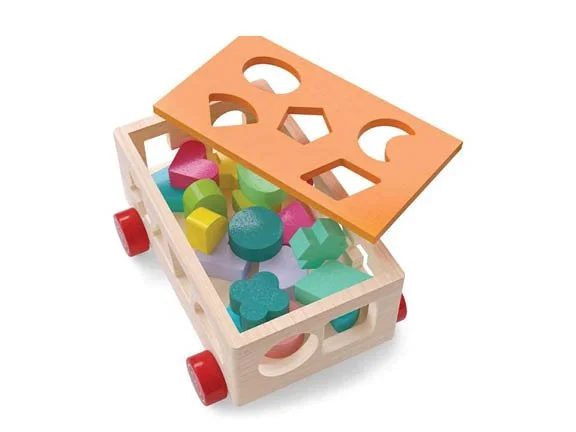
A wooden shape sorter, on the other hand, is likely Montessori-friendly because it helps children develop hand-eye coordination, shape recognition, and logical thinking.
Little Thinkers Wooden Toys are Montessori-Inspired Toys
Wooden toys have a timeless charm and, like our very own selection, they promote independence, enhance concentration, develop fine motor skills, encourage problem-solving and build a love for learning.
Our toys are simple and based on real-life objects. They avoid flashy, overstimulating elements and instead provide clear, tangible experiences.
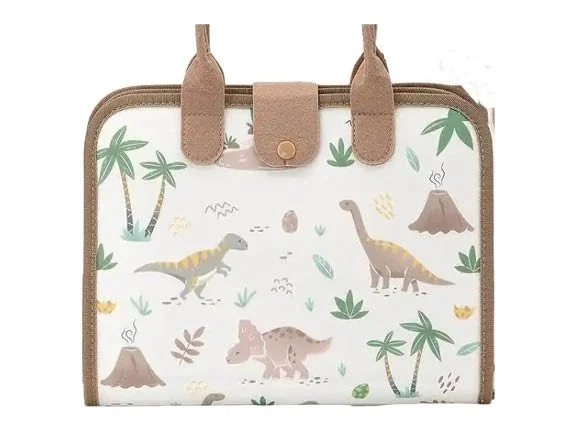
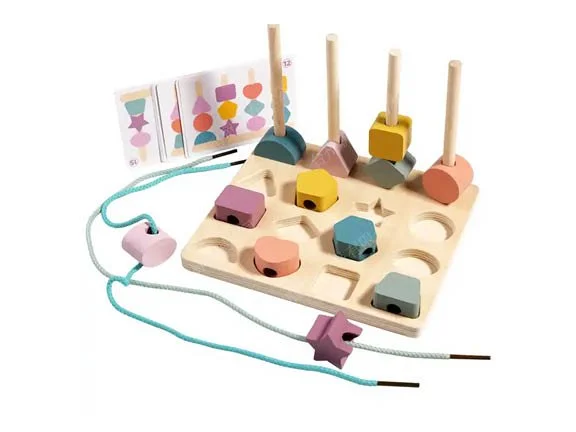

This 6-in-1 board offers a variety of fun and educational activities, including dinosaurs, numbers, shapes, alphabets, drawing, and essential life skills—all in one interactive learning tool.
Featuring a special art page complete with 4 colorful markers and a reusable drawing surface, so your child can get creative again and again. With playful sections showcasing 5 adorable dinosaurs, 10 numbers, 9 shapes, 26 letters, and a dedicated life skills area, this board delivers a well-rounded learning experience that builds creativity and key developmental skills.
Inspired by Montessori principles, it makes learning hands-on and fun. Toddlers and preschoolers will practice practical life skills like dressing, buckling, and tying, while also engaging with letters, numbers, and shapes. The board helps improve fine motor skills, problem-solving, hand-eye coordination, and cognitive growth—all while sparking a love for learning.
No more missing pieces! A convenient zipper pocket keeps all the accessories safe and organized, ensuring everything is ready for the next playtime.
At a portable 11×9 inches, this busy board fits perfectly in diaper bags, making it an excellent travel companion. It's the perfect screen-free solution to keep kids entertained on the go while enhancing their developmental skills.